Replacing a Roof with Existing Solar Panels: Costs & Steps
Need a new roof but already have solar panels? Learn real-world costs, steps, and code issues so you can plan a smooth roof replacement with existing solar.
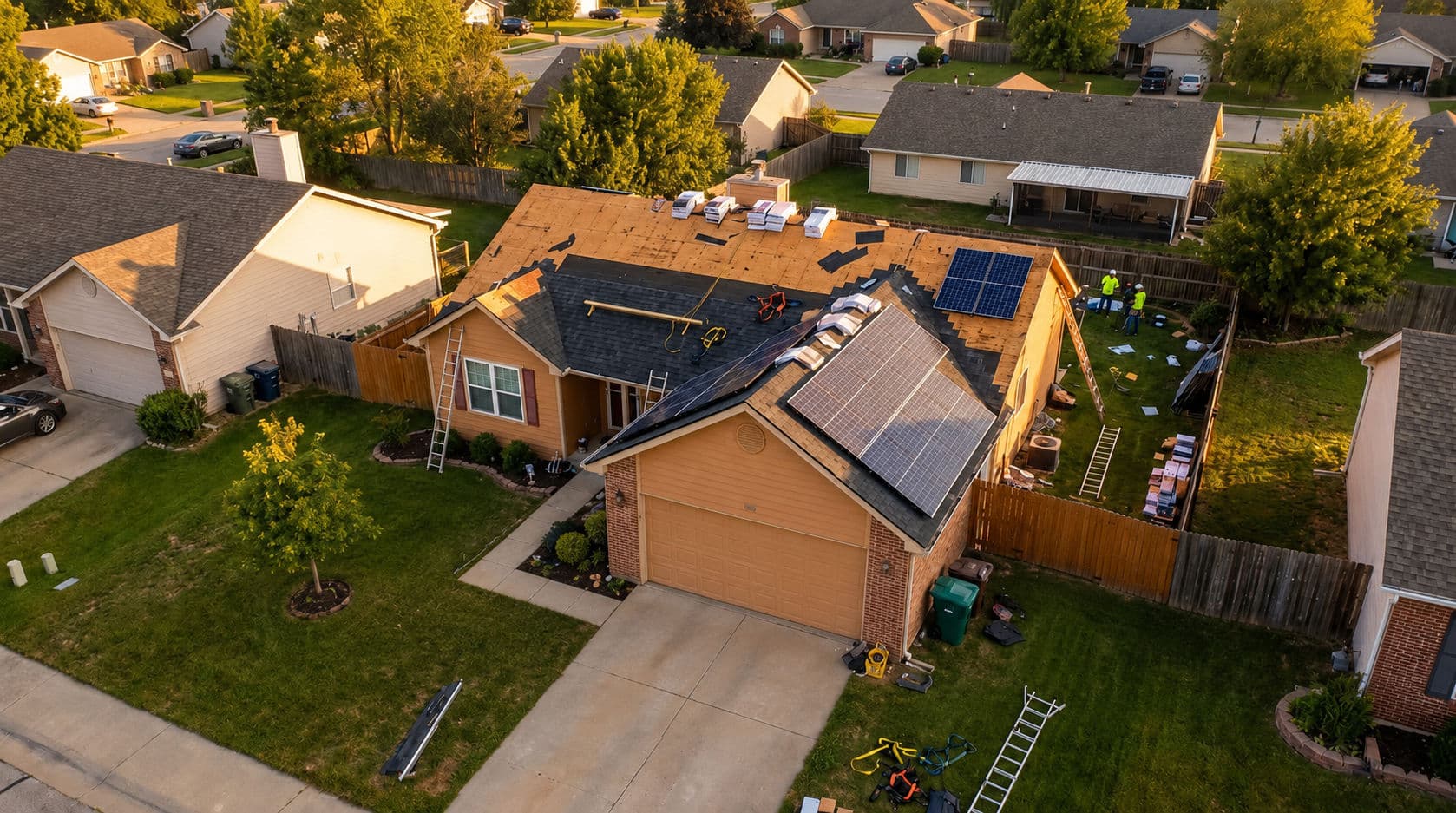
Replacing a Roof with Existing Solar Panels: A Real-World Example
We recently got a call from a homeowner — let’s call her Sara — who was in the middle of a pretty common California situation: she needed a new asphalt shingle roof, but her three-year-old solar system was sitting right on top of it.
Sara’s general contractor had quoted her a number that felt very high, and she was just trying to understand, “What does a roof really cost… and how much extra is this going to be with solar in the way?” She also owned her solar system outright and was wondering if she could (or should) handle the panel removal herself.
If you’re in the same boat — aging roof, existing solar, maybe an addition planned — this post walks through the real costs, steps, and decisions you’ll face, using Sara’s questions as our guide.
First Step: Understand Your Solar Situation
Before you can get an accurate roof estimate, you need to know exactly what you’re dealing with on the solar side. With Sara, we started with one key question:
- Is the solar system leased, financed, or owned outright?
In her case, it was paid in full and only three years old. That’s important because:
- Owned systems usually give you more flexibility. You can choose any qualified solar company (or in some cases, even handle part of the work yourself if you’re very handy and comfortable with the risk).
- Leased or PPA systems often require you to use the original solar provider or get written approval before anyone touches the panels. There may be fees or specific procedures spelled out in your contract.
If you’re not sure, dig out your solar paperwork or contact the company before you schedule roofing work. Your roofer can’t safely start until it’s clear who is responsible for removing and reinstalling those panels.
What It Really Costs to Remove and Reinstall Solar Panels
One of Sara’s big questions was, “Does it cost a lot of money to remove and replace solar?” The honest answer: yes, it’s a real line item and it surprises a lot of people.
Most reputable solar companies will charge on a per-panel basis. We typically see:
- Roughly $150–$280 per panel for remove-and-reinstall (labor, disconnect/reconnect, and basic hardware).
On a typical system with, say, 20 panels, that can mean $3,000–$5,600 just to get the solar off the roof and then put it back on once the new roof is done.
In Sara’s case, the good news was that her system was only three years old, so the rail system and stanchions (the mounts that attach to the roof) are likely in good condition. On older systems, there are times we discover:
- Corroded or outdated rails and hardware that need to be replaced.
- Flashing or waterproofing issues around penetrations that must be corrected to protect the new roof.
Those issues can add to the cost, which is why we strongly recommend using a solar company that’s established and reputable, not a “fly-by-night” outfit that may disappear when you need warranty support.
Can You Remove the Solar Panels Yourself?
Sara wondered if she could just have her original solar company remove the panels and then handle the rest herself. Here’s how we generally look at that:
- Technically possible? If you own the system, you can choose anyone (or yourself) to remove panels. There’s no law that says you must use a solar company.
- Practically smart? For most homeowners, we recommend hiring a licensed solar contractor.
Removing panels isn’t like taking down a satellite dish. You’re dealing with:
- High-voltage DC power
- Roof penetrations that need to remain watertight
- Manufacturer and utility warranties and interconnection agreements
If you choose to handle removal yourself or hire a non-solar contractor, understand that you’re responsible for any damage, leaks, or warranty issues that might follow. That’s why, when we coordinate a roof replacement, we either work directly with your solar company or bring in a trusted solar partner to handle that portion.
Key Roofing Factors That Affect Cost with Solar in Place
When Sara called, the first thing she asked for was a “rough estimate over the phone” on a 3,200-square-foot roof. Like we told her, that’s tough to do accurately because several details can swing the price up or down.
1. Layers of Existing Shingles
Older homes often have more than one layer of shingles. Your contractor’s quote might say something like, “Additional $X per square for each underlying layer.” That’s because each extra layer means:
- More labor to tear off
- More debris to haul away
- More time before the new roof can go on
We typically charge an additional fee per layer once we confirm what’s there. If your quote doesn’t clearly state how many layers were inspected, ask your contractor to verify — don’t assume there’s only one.
2. Spaced Sheathing vs. Solid Sheathing
Another important point we went over with Sara was spaced sheathing. Many older shingle roofs were installed on 1x boards with gaps between them (that’s the “spaced” part).
Current building codes, however, require a solid roof deck under asphalt shingles. That can be either:
- Solid wood planks with no gaps, or
- Existing planks with plywood installed over them
If your attic has spaced sheathing and someone installed asphalt shingles over it in the past, all the old roofing has to come off and new plywood must be added. That’s an extra material and labor cost that should be included in a proper estimate.
You can usually check this yourself the way we explained to Sara:
- Open your attic access.
- Shine a bright light up at the underside of the roof.
- If you see boards with visible gaps between them, you likely have spaced sheathing.
- If you see a continuous, smooth wood surface, you probably have solid sheathing already.
Permits, Additions, and One-Story vs. Two-Story
Because Sara was also adding about 300 square feet to the front of her house, there were a few more moving parts:
- Roof work requires a permit from the city. Your roofer or general contractor should pull this and factor the cost into the estimate.
- Additions change the roofline. If you’re adding square footage, framing, and new roof areas, make sure the roofing portion of the contractor’s quote is clearly separated so you can compare it with stand-alone roof bids.
- One-story vs. two-story affects labor and safety costs. In Sara’s case, the home was one-story, which generally keeps costs lower than a comparable two-story roof.
How to Get a Realistic Roof & Solar Replacement Plan
If you’re planning a roof replacement with existing solar panels, here’s a simple sequence we recommend (and used with Sara):
- Confirm your solar ownership and contract terms. Owned, leased, or financed — know the rules before anyone touches it.
- Get a per-panel remove-and-reinstall quote. From your current solar company or another reputable one. Use the $150–$280 per panel range as a sanity check.
- Have a roofer inspect layers and sheathing. Don’t rely only on a home inspection report; have a roofing professional verify in person or via clear attic photos.
- Ask for a line-item estimate. Separate costs for tear-off, sheathing upgrades (if needed), new shingles, solar R&R, permits, and any add-on areas like garages or additions.
- Coordinate timing carefully. Solar comes off first, then roofing, then solar goes back on once inspections are complete and the roof is watertight.
A little homework up front — like Sara taking attic photos and checking her solar documents — makes your quotes more accurate and helps avoid surprise costs once work begins.
If you’re unsure whether your roof and solar setup are ready for a replacement, we’re always happy to walk through the same questions we asked Sara and give you a clear, realistic picture of what to expect.