Planning Your Roof Replacement Before El Niño Rains
Worried about El Niño and a 20-year-old roof? Learn how to plan a roof replacement in Southern California, from leaks and hidden wood damage to timing your project.
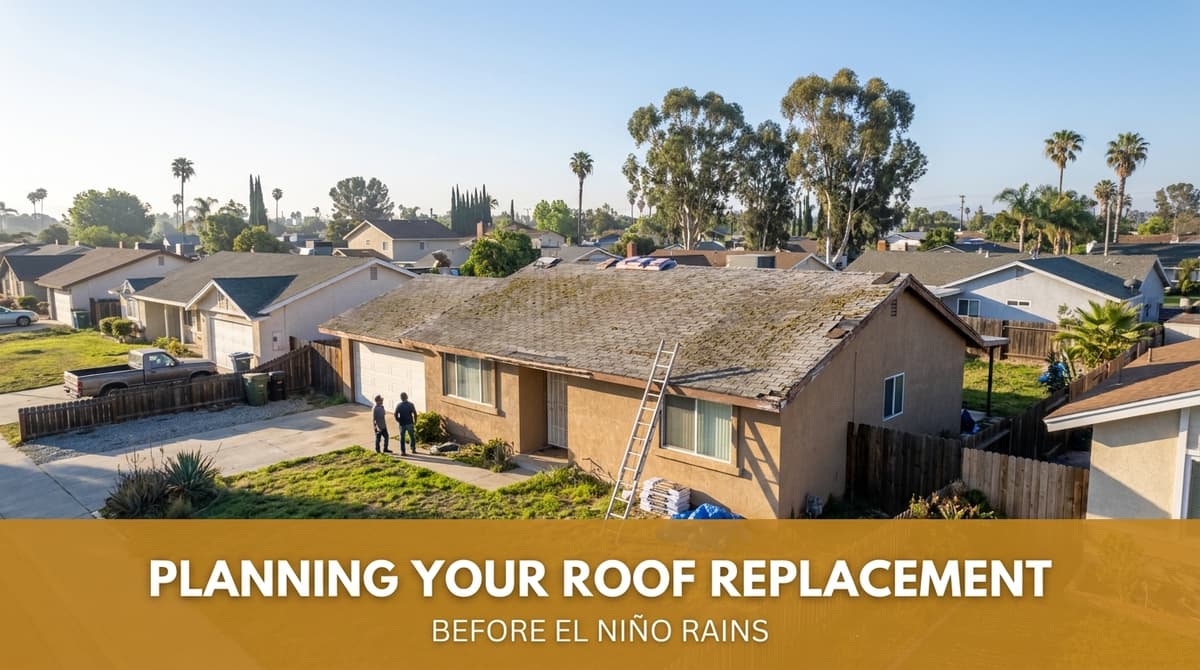
Planning a Roof Replacement Before El Niño Hits Southern California
We recently got a call from a homeowner in Mission Viejo — let’s call him Mark — who noticed a small leak during the last big rain. With all the talk about a "super" El Niño and more storms on the way, he didn’t want to wait and hope for the best. He told us his roof was around 20+ years old and was worried about what might be hiding under the shingles.
Mark’s questions are the same ones we’re hearing from a lot of Southern California homeowners right now: “Do I need to replace the roof before El Niño?” “What if there’s hidden wood damage?” “How long will the project take with rain in the forecast?” Let’s walk through how we answered him — and what you should know if you’re in the same boat.
When a “Small Leak” Means It’s Time to Act
Mark’s situation started with what he described as a “small leak” after a heavy rain. The stain on the ceiling wasn’t huge, and it seemed to dry up quickly. That’s exactly the kind of issue many people decide to watch instead of fix.
Here’s the problem: by the time you see a leak inside your home, water has already made its way through the roofing material, underlayment, and likely some wood. In a 20–25 year old composition "asphalt" shingle roof — which is what Mark had — that leak is often a sign the roof is at the tail end of its life.
Signs your roof may not make it through El Niño
As we talked with Mark, we asked a few questions we recommend every homeowner consider:
Age of the roof: If your roof is 20+ years old, it’s in the replacement window, especially if it’s original to the home.
Visible leaks or ceiling stains: Even small spots can indicate larger issues above the drywall.
Missing, curling, or cracked shingles: These are weak points where wind-driven rain can get in.
Past repairs in the same area: Repeated patch jobs often mean the system as a whole is failing.
Before an El Niño pattern brings extended periods of rain, it’s usually better to replace a borderline roof than to cross your fingers and hope it survives one more season.
The “Hidden Unknown”: Leaks and Wood Damage
One of Mark’s biggest concerns was the unknown: “What if you tear off the roof and find a bunch of rotted wood?” That’s a fair question and one we address on almost every estimate.
Any time there’s been a leak — even a small one — there’s a chance for hidden damage. Water can sit on the plywood (or boards) underneath your shingles and slowly soften or rot the wood. You may not see a thing from the ground, but we’ll find it once we open up the roof.
How we recommend budgeting for hidden wood damage
Here’s the rule of thumb we shared with Mark and share with all of our customers:
Plan for roughly 1% of your roof cost as a contingency for wood replacement.
Sometimes we don’t find any damaged wood at all.
Other times, especially where leaks have gone on for a while, we do need to replace sections of plywood or fascia.
We can’t see through the roof before we start, so we’re always upfront that wood repair is the one true “unknown.” Building that 1% cushion into your budget makes the process less stressful if we do find damage once the old shingles come off.
Why Roof Deck Type Matters (And How to Check Yours)
During the call, we asked Mark a quick question we ask many homeowners: when you look up in your garage or attic, do you see solid wood sheathing or spaced boards with gaps between them?
He had solid sheathing, which is great news for a modern shingle roof. Solid decking generally:
Provides a better surface for underlayment and shingles
Improves wind resistance and overall stability
Can reduce the amount of extra work needed during replacement
Is up to city building code, a big savings from needing to install wood to create solid sheathing
Homeowner tip: If you’re not sure what you have, snap a picture in your attic or garage looking up at the underside of the roof and send it to your roofer. A quick look can tell us a lot about the structure and help tighten up your estimate.
Timing Your Roof Replacement Around Rain and El Niño
Another big concern for Mark was timing. With forecasts calling for a strong El Niño and even the occasional tropical storm remnant reaching Southern California, he wanted to know if we could realistically get the project done before the heavy rains.
Here’s how we walked him through the schedule — and what you can generally expect.
Typical timeline before the rainy season
Estimate & measurement: We use aerial software to measure your roof, so there’s no delay waiting for a site visit just to get numbers together.
Permitting: We handle the permit for you. In many SoCal cities, this is fairly quick, but it’s still part of the schedule.
Start date: Right now, we’re usually able to start new projects within about 2–3 weeks, assuming the weather cooperates.
Once we’re on-site, a typical single-family home with a composition shingle roof can often be completed in a few days, depending on size and wood repairs.
Why it’s harder to replace roofs during heavy rains
We always tell homeowners like Mark: it’s much easier to replace a roof before the major storms hit than during them. Here’s why:
We don’t like to open up large roof areas when there’s a real threat of rain.
Storms can delay projects and push your start date back.
Active leaks can worsen quickly during back-to-back storms, causing more interior and wood damage.
If you’re thinking about a replacement and we’re heading into an El Niño winter, the earlier you get on the schedule, the better your chances of having a dry, secure roof before the long, soaking rains.
Upgrading Your Roof: Modern Shingles vs. 20-Year-Old Roofs
Mark’s roof was about 20 years old, which is right in the typical lifespan for older composition shingle systems. The roofs we’re putting on today are a step up in several ways.
Here are some of the benefits we explained to him:
Longer warranties: Many modern shingles carry around a 30-year warranty (depending on the product and installation details).
Algae-resistant coatings: Help reduce streaking and staining, especially in shaded or coastal areas.
Cool-roof rated options: Reflective technology to help your roof absorb less heat — which can make a real difference in a Southern California summer.
So while no one loves the idea of a major home project, replacing a tired 20–25-year-old roof before a wet El Niño year not only protects your home from leaks, but can also improve comfort and curb appeal for decades to come.
Thinking About Your Own Roof Before El Niño?
If you’ve noticed even a small leak, know your roof is 20+ years old, or just don’t feel confident heading into a rainy winter, now is the time to have it checked. We can measure your roof remotely, talk through your decking type, explain how we handle hidden wood damage, and help you plan timing around the forecast.
Whether you’re in Mission Viejo or elsewhere in Southern California, don’t wait for the first big El Niño storm to test your roof. By then, that “small leak” might have turned into a big, expensive problem hiding in the wood below.