Flat Garage Roof Leaks: Why They Happen & How We Fix Them
Flat roof over your garage leaking and pooling water? Learn why it happens, how to maintain drains, and the best repair, coating, and replacement options.
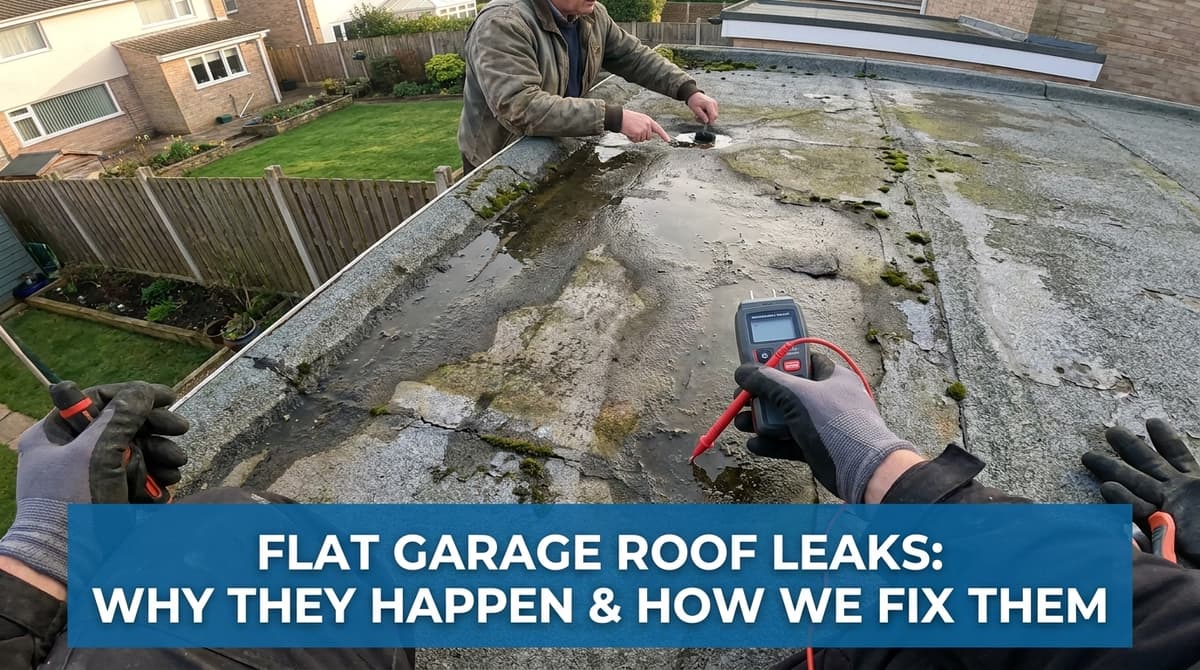
Flat Roof Over Your Garage Keeps Leaking? You’re Not Alone
We recently got a call from a homeowner — let’s call her Susan — in a neighborhood where, as she put it, “Everybody hates the flat roof.” Susan’s garage roof was doing two things flat roofs are infamous for: leaking inside and pooling water on top, especially right under a bedroom window.
She told us she was pretty sure the roof “needed grating” so water would actually make its way to the drain instead of sitting there like a shallow pond after every storm. On top of that, she had another flat roof higher up on the house and suspected the drains up there were clogged, too.
We see this kind of situation all the time on flat roofs over garages. Let’s walk through why this happens, what you can safely do as a homeowner, and what repair and maintenance options actually make sense.
Why Flat Roofs Over Garages Leak and Pool Water
Flat roofs aren’t truly flat — or at least, they shouldn’t be. They need a very slight slope so water can find its way to a drain or gutter. When something goes wrong with that setup, you get the classic symptoms Susan described: leaks and big puddles.
Common causes of leaks and ponding
- Improper slope: Sometimes the original roof was never sloped correctly, or the structure has settled over time. Water naturally collects in low spots instead of running to the drain.
- Clogged drains and scuppers: Leaves, dirt, and debris block the outlets. The water has nowhere to go, so it sits and slowly works its way into seams, cracks, and around penetrations.
- Aging or failed coating/membrane: Flat roofs often rely on coatings or membranes to stay watertight. Over time, UV rays, standing water, and foot traffic break them down, leading to cracks, blisters, and open seams.
- Rotten or damaged wood underneath: Once water finds a way in, it can damage the wood deck below. That can create even deeper low spots, which hold even more water — a vicious cycle.
In Susan’s case, we could already see from aerial imagery that she had a flat roof over the garage and another flat section over the house. We planned to check both, because problems on one often hint at potential issues on the other.
How Pooling (Ponding) Water Starts — and Why It Matters
Homeowners sometimes think, “It’s just a puddle, it dries up in a day or two.” On a flat roof, that puddle is a red flag.
What ponding water does to your roof
- Accelerates wear: Standing water magnifies sun damage and keeps the surface constantly wet. That speeds up cracking, splitting, and deterioration of coatings and membranes.
- Finds the weakest point: Water will patiently search for the tiniest pinhole, seam, or gap. Eventually it finds a way into the layers below.
- Creates structural issues: Over time, repeated wetting can rot wood decking, causing it to sag. That sag becomes a deeper pond, and the problem compounds.
If you see water that’s still sitting on your garage roof 48 hours after a rain, that’s considered ponding and it’s a sign the slope, drainage, or surface condition needs attention.
Simple Flat-Roof Maintenance Homeowners Can Stay On Top Of
Susan asked a great question: “Do you have somebody who gets up on the roof and checks the drains, like, maybe every six months?” That’s exactly the mindset that keeps flat roofs out of trouble.
Safe maintenance habits you can follow
(Always prioritize safety — if you’re not comfortable getting on the roof, don’t.)
- Check drains and scuppers regularly: At least once or twice a year, and after big storms, make sure drains and outlets are clear of leaves, mud, and debris. This is one of the most effective ways to prevent pooling.
- Look for standing water: After rain, take a quick look at the roof (from a window or the ground if possible). Mark where water collects so you can point those areas out during an inspection.
- Inspect around penetrations: Skylights, vents, and pipes are notorious leak points. Look for cracked sealant, bubbling, or loose flashing.
- Schedule professional inspections: If you don’t have someone “young and sprightly,” as we told Susan, call us (or a qualified roofer) at least once a year to inspect drains, coatings, and flashing.
Many of our customers simply have us come out annually before the rainy season to clear drains, check the flat areas, and give them a status report. It’s a modest investment that often prevents major repairs later.
Your Main Repair Options: Patch, Coat, or Replace?
When we get on a flat garage roof like Susan’s, we’re really answering two questions: Where is it leaking? and How much life is realistically left in this system? From there, the options usually fall into three categories.
1. Spot repairs on damaged areas
If the roof is generally in good shape but has a few problem spots, we can:
- Cut out and replace any damaged or rotten wood in localized areas
- Repair or replace the membrane or coating in those spots
- Re-seal seams, penetrations, and flashing where needed
This is often the most budget-friendly option when leaks are limited and the rest of the roof is still structurally sound.
2. New coating system (with possible renewable warranty)
For many flat roofs, especially over garages, a new coating system is a smart middle ground between endless patching and full replacement.
Here’s how it typically works:
- We identify and repair any underlying wood damage or soft spots.
- We clean and prep the roof surface thoroughly.
- We apply a high-quality roof coating recommended for your roof type.
Many modern coatings offer renewable warranties. For example, you might receive a 10-year warranty. At the 10-year mark, instead of tearing everything off, you can have another layer of coating applied. Because the underlying repairs are already done, there’s less prep work the second time around, and you extend the life of the roof another 10 (or even 20) years.
3. Full flat-roof replacement
Sometimes, especially on older roofs or those with long-term ponding and leaks, the best answer is to start over:
- Remove (demo) the existing roof system down to the deck
- Replace any rotten or compromised wood
- Rebuild correct slope so water flows properly to drains and scuppers
- Install a new flat-roof system, often with a new coating or membrane
This is the most expensive option upfront, but it solves chronic issues like bad slope and widespread wood damage. In situations like Susan’s, where water pools in a consistent low spot and won’t drain without a “flood,” correcting the slope as part of a replacement can be the long-term fix.
When to Call a Pro About Your Flat Garage Roof
Here are a few signs it’s time to bring in a roofing professional:
- Water stains or active dripping inside the garage or adjacent rooms
- Regular ponding that lasts more than 48 hours after rain
- Bubbling, cracking, or peeling on the roof surface
- A flat roof that’s over 15–20 years old and has never been coated or evaluated
When we visit a home like Susan’s, we’ll usually inspect all the flat sections while we’re there, clear drains, assess the slope, check for wood damage, and then walk you through options: simple repairs, a new coating system, or full replacement if needed.
If your flat roof over the garage has become “a nightmare,” you’re not stuck with it. With the right combination of good drainage, regular inspections, and the proper repair or coating system, that flat roof can quietly do its job for many years to come.