Spaced Sheathing, Solid Sheathing & Roof Tear-Offs Explained
Thinking about a shingle roof replacement? Learn the difference between spaced and solid sheathing, how roof layers affect cost, and what to check before getting quotes.
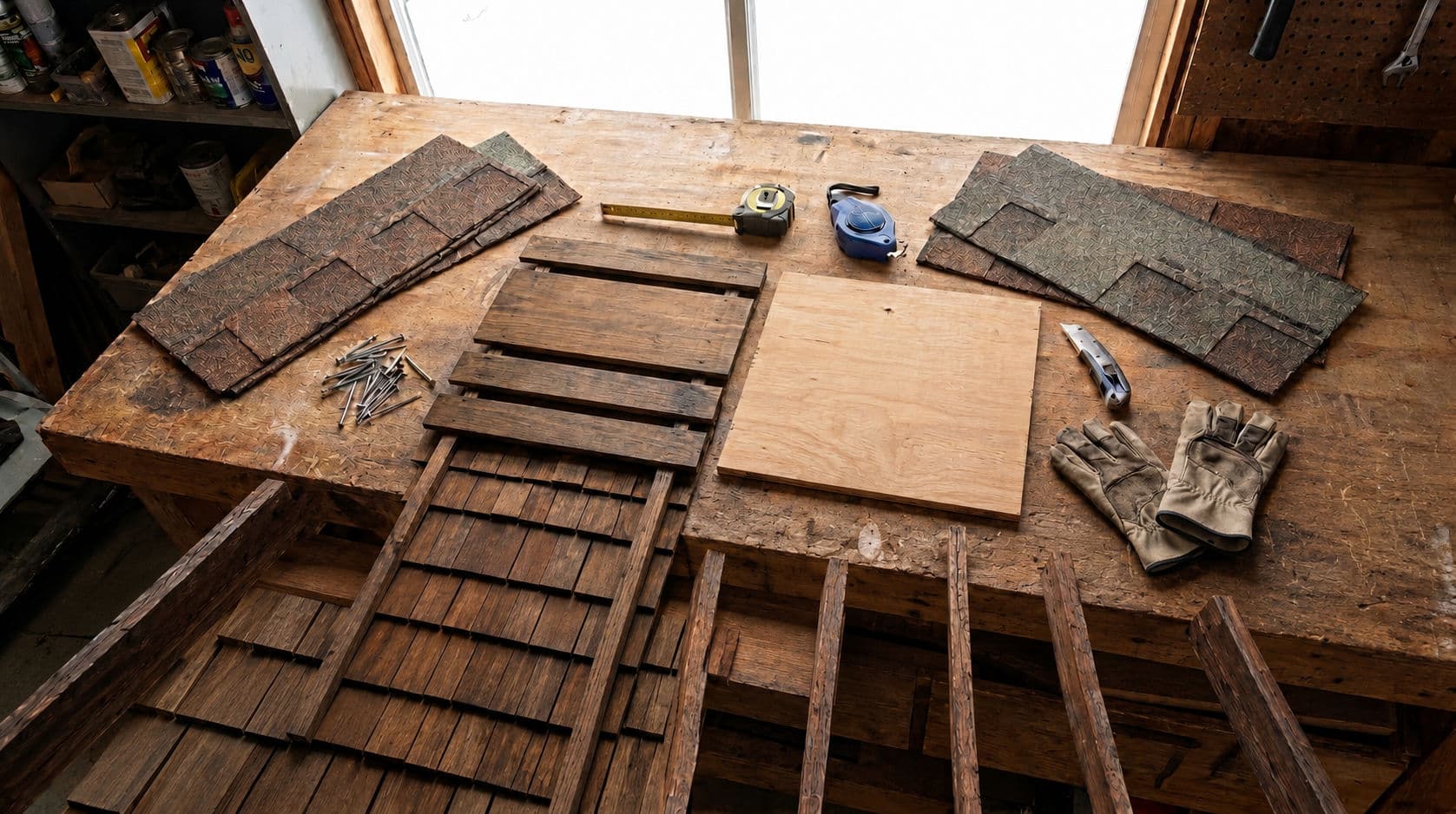
Space Sheathing, Solid Sheathing, and Tear-Offs: A Real-World Example
We recently got a call from a homeowner — let's call him Dan — who wanted a quote to replace his shingle roof. Pretty straightforward, right? But there is often more to learn lying underneath those shingles to determine costs.
Like many homes built a few decades ago, Dan's house may have originally had wood shingles, then later someone added asphalt shingles on top. On top of that (no pun intended), there was the question of whether his roof deck has spaced sheathing or solid sheathing — something he’d never heard of before he called.
If you’re thinking about a shingle roof replacement, understanding what’s under your shingles will help you get more accurate quotes, avoid surprise costs, and make sure your new roof meets current building codes.
What Is Roof Sheathing, Anyway?
Roof sheathing (sometimes called decking) is the layer of wood your roofing material is attached to. Think of it as the solid base that supports everything else — underlayment, shingles, flashing, and so on.
In most homes today, sheathing is usually plywood or OSB (oriented strand board). In older homes, though, you’ll often see it built with individual boards spaced apart ("spaced" or "skipped" sheathing) instead.
Spaced Sheathing vs. Solid Sheathing
When we were on the phone with Dan, we asked if he knew whether he had spaced sheathing. He didn’t, and that’s very common — most homeowners don’t. Here’s the difference:
Spaced Sheathing – Also called skip sheathing. This is when you have individual boards (often 1x4 or 1x6) with gaps between them. Board, gap, board, gap. It was commonly used under wood shake or wood shingle roofs so the wood could breathe and dry out.
Solid Sheathing – This is a continuous surface of plywood, OSB, or tightly laid boards with no intentional gaps. This is what modern asphalt shingle manufacturers and building codes typically require.
Why does it matter? Because if you have spaced sheathing and want a modern asphalt/composition shingle roof, most jurisdictions require us to add solid sheathing over it to meet building code and to honor the shingle manufacturer’s warranty. For houses with spaced sheathing, the simple solution is to install plywood over the top of the spaced sheathing.
Why So Many Older Homes Have Multiple Roof Layers
During our call, we explained to Dan that many homes built in the 60s, 70s, and even 80s started with wood shingles or shakes installed over space sheathing. Years later, when it came time to “re-roof,” it was very common for roofing contractors to:
Leave the original wood shingles in place, and
Add a layer of asphalt (composition) shingles right over the top.
That saved time and money back then, but today it creates extra work when the roof needs to be replaced properly. In some cases, we find:
Wood shingles over spaced sheathing
Plus a layer (or more) of asphalt shingles over the wood
Every additional layer adds weight and complexity, and modern codes usually limit you to no more than two layers of roofing. In most full replacements today, we’re doing a complete tear-off back to a solid, code-compliant deck which also supports the manufacturer's warranty terms.
Not sure how many layers of shingles you have on your roof? We can stop by to let you know.
How Sheathing Type and Layers Affect Cost & Labor
When we build a quote, the two big unknowns we’re trying to clarify — just like we did with Dan — are:
What type of sheathing is on the roof? (spaced vs. solid)
How many layers of roofing are there?
If You Have Space Sheathing
If your roof has space sheathing, we typically need to:
Leave the existing boards in place (they still provide structural support), and
Add a layer of plywood or OSB over them to create a solid deck.
This adds:
Material cost – sheets of plywood/OSB plus fasteners
Labor cost – time to cut, lift, and install the new sheathing
Dumpster & dump fees – especially if we’re also tearing off multiple roofing layers
On the plus side, once it’s done, you have a modern, code-compliant deck that will work with current shingle systems and warranties.
If You Already Have Solid Sheathing
In Dan's case, when he looked in his garage he could see plywood on top of older boards. That told us the home likely already has solid sheathing. That’s good news because:
We don’t need to add plywood across the whole roof.
The tear-off is simpler: remove the old shingles, inspect, and repair localized bad spots only.
The quote ends up lower because there’s less material, labor, and disposal cost.
This is exactly why we ask for those attic or garage photos up front — it helps us give you a much more accurate estimate before we even set foot on a ladder.
Simple DIY Checks You Can Do Before Getting Quotes
You don’t have to be a roofer to gather helpful information. Here are a few things you can safely check that will make your quotes more accurate and comparable.
1. Check the Sheathing from the Garage or Attic
Just like we asked Mark to do, stand in your garage or attic and look up at the underside of the roof where the wood is exposed:
If you see individual boards with gaps between them, you likely have space sheathing.
If you see large, continuous sheets of wood (usually 4x8 panels) with no intentional gaps, that’s solid sheathing — probably plywood or OSB.
Sometimes you’ll see old boards plus plywood on top, which is still considered a solid deck.
Take clear photos of what you see and send them to your roofer when you request a quote. That alone can prevent a lot of pricing surprises later.
2. Look for Clues About Multiple Roof Layers
There are a couple of easy ways to guess whether you may have more than one layer of roofing:
Check the edge of the roof (from the ground, not a ladder). At the eaves, look at the thickness where the shingles overhang. If it looks unusually thick or “stacked,” there may be multiple layers.
Ask about history – If you know the house originally had wood shakes or shingles and later got “re-roofed” instead of “torn off,” there’s a good chance there’s more than one layer up there.
You don’t have to be exact — just telling us, “I think there might be wood shingles under the current asphalt shingles,” helps us plan and price the job realistically.
3. Take a Few Overall Roof Photos
From ground level, snap:
A couple of photos from the front and back of the home
Any noticeable problem areas (sagging spots, missing shingles, heavy staining)
Combine those with the attic/garage sheathing photos, and we can often build a very solid preliminary quote before coming out for a detailed inspection.
Why Building Code & Manufacturer Requirements Matter
Modern building codes and shingle manufacturers generally want:
Installation on solid sheathing (no gaps)
Limited layers (often a maximum of two, usually only one for warranties)
Proper fastening and underlayment matched to the climate and roof pitch
Planning Your Roof Replacement the Smart Way
If you’re getting ready for a shingle roof replacement, here’s a quick checklist you can work through before you start calling roofers:
Look in your garage or attic and note whether you see space or solid sheathing.
Take a few clear photos of the underside of the roof deck and the exterior roof.
Ask yourself if the home likely had wood shingles originally and if it’s ever been re-roofed without a full tear-off.
Share that information and photos when you request quotes so contractors can budget properly for tear-off, sheathing, and disposal.
The more we know up front, the more accurate your quote will be — and the fewer surprises you’ll have once the old roof starts coming off.
If you’re unsure what you’re looking at in your attic or garage, snap a few pictures and send them over. We’re always happy to take a look and tell you whether you’re dealing with space sheathing, solid sheathing, or something in between before you commit to a full roof replacement.