Considering a Standing-Seam Metal Roof?
A homeowner in coastal city like, San Clemente, is looking for a long-lasting reroof option. Here’s how we help plan for a beautiful, standing-seam metal roof that’s built to last by the ocean.
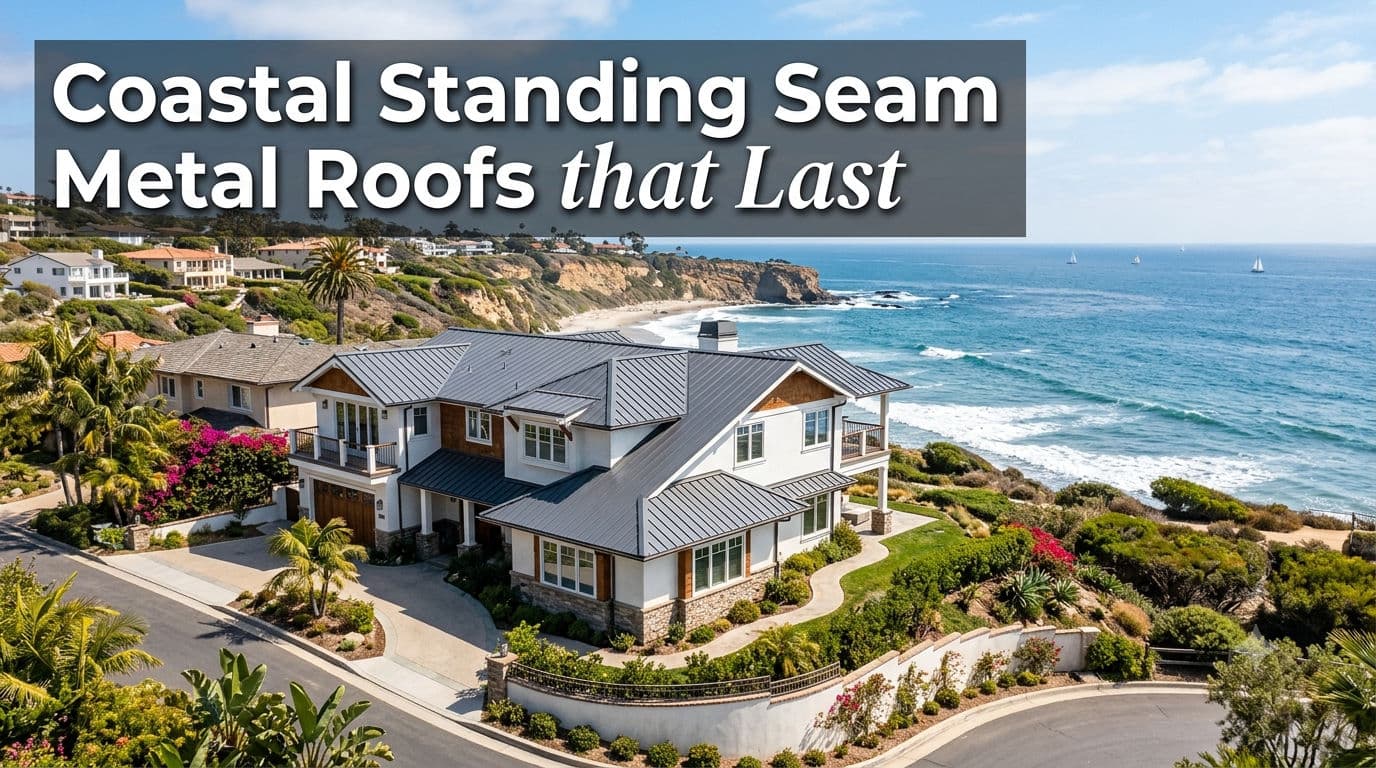
A San Clemente homeowner wants to reroof his house with a new, standing-seam metal roof with the skylights and recoating his decks.
We recently got a call from a homeowner — let's call him Mark — who lives up on the hills above the coast. His house was built in the 60s, the roof was last done in the late 90s, and it was finally time to tackle the top of the house.
Mark had done his homework. He'd watched a neighbor recently install a beautiful standing-seam metal roof, talked to another neighbor whose black standing seam-metal roof was installed about 15–20 years ago and still looks gorgeous, and decided he also wanted a standing-seam metal roof. On top of that, he had:
Old, wood-framed skylights that are failing and leaking
No solar yet, but a strong interest in adding it
Decks that could use resealing while we were already up there
If you're a coastal homeowner thinking about installing a standing-seam metal roof, skylights, and future solar, you're in very similar shoes to Mark. Here's how we walked him through the options and what we shared from our industry experience.
Why standing-seam metal makes sense near the coast
When Mark asked for standing-seam metal for his roof, we knew exactly why. We install a lot of these types of roofs along the coast, especially in Newport Beach, Dana Point and Laguna Beach and we've seen firsthand how it performs compared to older composite shingle, Cal-shake or tile roof systems.
For coastal homes, we explained some of the biggest benefits we see on our projects:
Longevity: Properly installed, quality standing seam metal can last several decades with minimal maintenance.
Fewer penetrations: Most of the system is locked together with concealed fasteners, so there's less opportunity for leaks.
Excellent for complex roofs: Mark's house had multiple roof sections and decks; metal lets us custom-cut panels on-site to fit those details precisely.
Because he's near the ocean, we also told him something we tell all our coastal customers: metal type matters. On our coastal metal projects, we are required to use rust-resistant aluminum and coating system for the warranty to be valid. It cost slightly more than standard metal steel, but in our experience the extra protection against salty air is worth every penny.
Timing your project around weather and labor
Mark called before the rainy season begins here in Southern California which is very wise. On our standing-seam metal roof projects, we custom-fit every panel on-site. It's a highly detailed, labor-intensive process that we put the extra time into to be done right and look beautiful for decades to come.
We shared a story from one of our past seasons: we started a couple of metal roofs in the Fall, and early rains slowed down our production schedule. The work still turned out beautifully, but the schedule stretched out because we were constantly working around weather windows. That's why we always urge homeowners like Mark to start the decision-making early if they want these type of roof — it gives us time to do it right before the storms start to roll in. With this year being
Dealing with old skylights on a new metal roof
Mark's biggest pain point wasn't actually the old composite roof — it was his six wood-framed skylights. The wood was aging, the glazing and sealant was failing, and he was tired of worrying about leaks. However, he didn't want to lose the ability to open them up and vent heat during those warmer Summer weeks.
We see this all the time on older coastal homes, so we walked him through the options we typically recommend:
Replace, older wood-framed skylights with aluminum, rust resistant skylights. In our experience, tying brand-new metal roofing into 25+ year-old wood-framed skylights is asking for future leaks.
Go with all-weather materials. Modern skylights use durable frames and long-lasting aluminum metal designed to handle UV, salty air, and temperature swings much better than the old wood units.
Consider motorized venting. For homeowners like Mark who love the ability to vent hot air out of the house, we recommend motorized, solar-powered venting skylights with remote controlled for convenience and better seals.
On every metal reroof where skylights are involved, our team carefully plans the flashing details so the metal panels, underlayment, and new skylights to all work as a unified system. That's the key to avoiding the "leaky skylight" headaches Mark was so done worrying about.
Standing-seam metal and solar: Why we love the combo
Mark was also looking ahead to future solar panels. He'd heard that metal roofs and solar “play nicely together,” and he was right to ask about it before we started his roof.
We explained how we handle this on our projects. Here's why KJC Roofing and our solar partners love standing-seam metal roofs:
No extra roof penetrations: Solar brackets can clamp directly to the standing seams instead of screwing through the roofing surface.
Cleaner waterproofing: Fewer holes mean fewer potential leak points over the life of the system.
Future flexibility: If the solar array ever needs to be adjusted or replaced, it's much easier to work with a standing seam metal roof system.
On our metal roof projects where solar is planned, we like to coordinate with the solar company ahead of time. That allows us to:
Confirm panel layout so seams and attachments line up smartly
Plan wiring paths and roof penetrations (where needed) in the driest, safest locations
Make sure warranties from both the roof and solar sides stay intact
Thinking about a standing-seam metal roof of your own?
If you're like Mark — living near the coast, standing-seam metal roofs can be an excellent long-term investment when it's designed and installed correctly.
From choosing the right rust-resistant metal to upgrading skylights and planning for solar, our team's approach is always to look at the whole house from the top down. That way, when you take on remodeling inside your home, you don't have to worry about leaks showing up later, and you're not tearing into a brand-new roof to add solar a few years down the line.
If you'd like us to walk your home the way we did with Mark's, we're happy to come out, take a detailed look, and talk through your options in plain language, neighbor to neighbor.